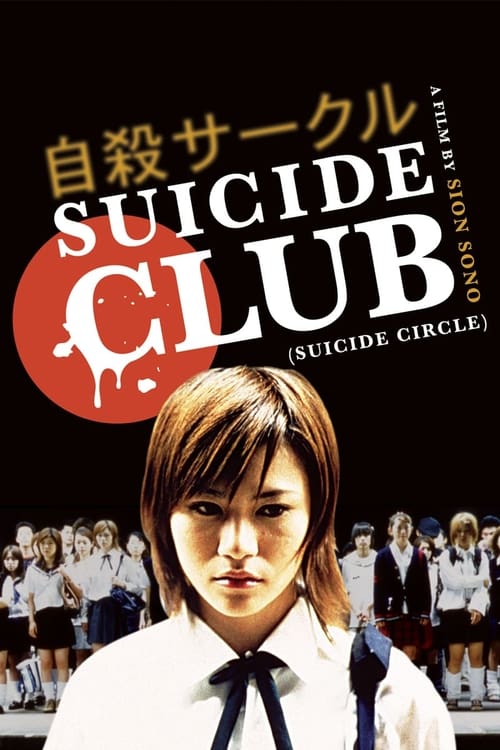
Quick Summary
Suicide Club (2001) culminates not in a clear solution, but an unsettling revelation that the widespread suicides are orchestrated by a group of enigmatic children, representing a generational shift and a critique of societal disconnection. The ending suggests that the "Suicide Club" is less a literal organization and more a pervasive cultural phenomenon, observed and perhaps guided by these seemingly innocent youths who evaluate humanity's 'suicide score'.
Quick Facts
| Title | Suicide Club (2001) / Jisatsu Sâkuru |
|---|---|
| Ending Type | Ambiguous, Open-ended, Metaphorical |
| IMDb Rating | 6.5/10 |
Complete Review & Plot Breakdown
Are you looking for the full story, cast details, and deep analysis? Read our comprehensive and spoiler-free guide on Suicide Club (2001).
Frequently Asked Questions (FAQ)
What is the main plot of Suicide Club (2001)?
Suicide Club (2001) follows Detective Kuroda as he investigates a terrifying string of mass suicides sweeping across Japan, starting with 54 high school girls. He searches for a tangible cause, uncovering strange websites, pop idol groups, and enigmatic figures, ultimately realizing the phenomenon is far more complex and abstract than a simple criminal conspiracy.
Is Suicide Club (2001) worth watching?
Suicide Club (2001) is considered a cult classic for its unique blend of horror and social commentary. It's highly recommended for viewers who appreciate thought-provoking, surreal, and unsettling movies that delve into deeper themes of identity, societal disconnection, and the influence of media, rather than straightforward narratives or jump scares. Be prepared for graphic content and an ambiguous ending.
What genre is Suicide Club (2001)?
Drama, Horror, Thriller
Explore more exclusive content and reviews only at BingeVaults.
Komentar
Posting Komentar